Fortnite grind to Unreal in Ranked Reload versus casual Battle Royale climbing explained
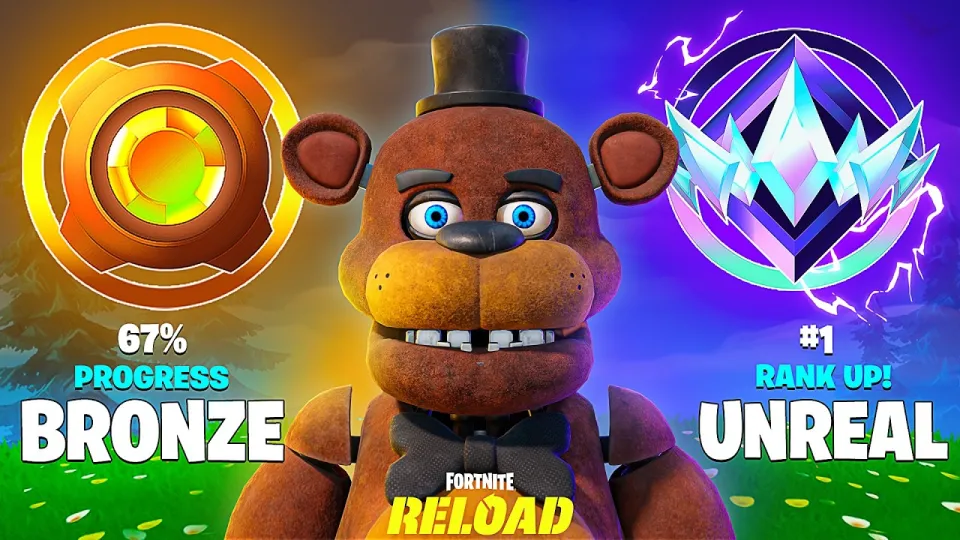
Video: I Played 24 HOURS for UNREAL! (Reload Speedrun on Day 1)
Want articles like this for your own video to promote it on YouTube and Google? Order them through the Telegram bot @sat_sit_bot. It writes articles around your video, embeds the video and publishes them on popular niche websites (no ads). Try it free: 50 articles on us.
· based on the channel TG Plays
Fortnite's ranked ladder is a time investment, not a single lucky session: reaching Unreal in Ranked Reload means grinding consistent placements, eliminations and survival across dozens of short matches after the seasonal reset. The fastest route is picking the mode where you win fights most often, and for players with strong mechanics that is usually Reload rather than standard Battle Royale. The channel's own Fortnite hub, the TypicalGamer Fortnite page, is where the creator's maps and updates live if you want to practice the same style of play.
What Fortnite Ranked Reload actually is
Ranked Reload is Fortnite's competitive playlist built on the Reload ruleset, where eliminated players can come back into the match while their teammates stay alive, and matches are shorter than a full Battle Royale round. The core loop is simple: drop, fight early, use respawns to re-enter, and keep the squad alive long enough to close out the final circles. Because a single match takes far less time than a standard BR game, you see more fights per hour, which means your rank moves faster in both directions. A bad streak costs more than it would in a slow, survival-heavy lobby, and a good streak compounds quickly.
Ranks in Reload use the same tier structure as the rest of Fortnite ranked play, from the low metal tiers up through Elite, Champion and finally Unreal. Unreal is not a fixed point total you can bank once and forget: it is the top bracket, and the seasonal reset drops everyone back down so the ladder has to be climbed again from scratch.
Why the reset changes the climb
A rank reset flattens the ladder, so early lobbies mix players who belong three or four tiers apart. In the first hours after a reset, Unreal-level players and mid-tier players queue into the same matches, which makes the opening stretch either brutally hard or surprisingly soft depending on your own skill level. That is the single biggest reason a zero-to-Unreal run is attempted right at reset: the number of matches needed is lower when the system is still sorting everyone out, and the points per win are inflated relative to a settled season.
The trade-off is volatility. Losing early fights against stronger opponents during that window can stall progress, and the difference between a fast climb and a slow one often comes down to how quickly a player adapts to the lobby quality rather than raw aim.
How a 24-hour push to Unreal is structured
A full day of Ranked Reload is not one continuous queue; it works because of pacing. A practical structure looks like this:
- Warm-up block: two or three unranked or low-stakes matches to calibrate aim and landing spots before touching ranked points.
- Long ranked block: the bulk of the session, played in sets of matches with a short break between sets to avoid tilt.
- Fixed landing plan: one or two contested drop spots you know better than the lobby, so early fights are predictable.
- Break discipline: real food, water and a screen break every couple of hours, because fatigue shows up as sloppy third parties long before it shows up as bad aim.
- Final push: the last stretch played with a duo or squad you trust, since team survival is what protects points in Reload.
The 24-hour framing is content, not a requirement. Most players will climb faster across several shorter sessions than in one marathon, because decision quality drops sharply after hour eight.
Ranked Reload versus standard Battle Royale for climbing
The honest answer to which mode is better for reaching Unreal depends on what kind of player you are. Reload rewards mechanical confidence and fast decision-making: respawns mean you can take a fight, lose it, and still contribute, and short matches mean a bad game is cheap to discard. Standard Battle Royale rewards placement discipline and late-game positioning, and a single top-five finish can be worth more than several frantic Reload matches.
If your eliminations-to-deaths ratio is strong but your late-game rotations are weak, Reload is the faster ladder. If you win by surviving rather than by fighting, standard ranked BR will protect your points better. Players who bounce between the two often find their rank stalls, because the habits that earn points in one mode actively cost points in the other.
Common questions from the ranked grind
One recurring worry is whether ranked feels harder this season, and the answer is usually yes at the start: resets compress the ladder, so the same tier contains stronger opponents than it did a month earlier. Another is the near-miss scenario, finishing a session a fraction short of the next rank; that is a pacing problem, not a skill problem, and it is fixed by stopping earlier and returning fresh rather than queuing tired.
Sweaty lobbies during themed events are another regular complaint. Limited-time modes and event weeks pull strong players back into the game, so ranked queues get denser for a few days. The practical response is to queue at off-peak hours or to play the event modes for fun and keep ranked for when the lobby quality settles. Finally, viewers often ask whether a creator can realistically hit the top rank in a day; the answer is that it depends on starting rank, squad quality and how many hours are actually played at full focus, not on the length of the stream.
Useful links
- Fortnite maps and updates from the creator: https://www.fortnite.com/@TypicalGamer
- JOGO studio's Fortnite page: https://www.fortnite.com/@JOGO
- Community Discord: https://discord.gg/TypicalGamer
- Twitter: https://twitter.com/TypicalGamer
- Instagram: https://instagram.com/typicalgamer
The verdict on grinding Fortnite ranks
Ranked Reload is the better ladder for players who trust their fighting and want faster feedback, while standard ranked Battle Royale remains the smarter choice for patient, placement-first players. A zero-to-Unreal run in a single day is a showcase of volume and focus rather than a strategy most players should copy; spreading the same number of matches across a week usually produces a higher rank with less frustration. The reset window is genuinely the best time to climb, because inflated points and mixed lobbies reward anyone who starts early. This breakdown is based on the Ranked Reload run published by the TG Plays channel, and you can follow the creator's own Fortnite projects through the TypicalGamer Fortnite page.
Key takeaways
- Ranked Reload ranks reset to zero, so every climb starts from the bottom tier again.
- The 24-hour push targets Unreal, the top rank in Fortnite's ranked ladder.
- Reload is a faster respawn-based mode: shorter matches, more fights per hour.
- Ranked Reload shares the same rank tiers as Battle Royale but rewards aggression differently.
- Creator code TYPICALGAMER and the Fortnite maps from @TypicalGamer and @JOGO are the channel's own projects.
Source: I Played 24 HOURS for UNREAL! (Reload Speedrun on Day 1) · Markdown version
Questions & answers
How long does it take to reach Unreal in Fortnite Ranked Reload?
There is no fixed number, because it depends on your starting tier after the reset, your win rate and how many matches you play per session. A dedicated player grinding full days can move several tiers in a reset window, while a casual player may take weeks. The key variable is points per match, which rises sharply when you survive deep and convert eliminations.
Is Ranked Reload easier than normal ranked Battle Royale?
It is faster, not strictly easier. Respawns let you re-enter a match and keep contributing, and short rounds mean you can abandon a bad game cheaply. But the same speed works against you: mistakes cost points quickly, and lobbies right after a reset are packed with stronger players.
Why do Fortnite ranked lobbies feel harder at the start of a season?
A rank reset pulls everyone back toward the bottom, so high-skill players pass through the lower tiers on their way up. For the first days, a mid-tier player can meet opponents who normally sit several tiers above. Lobby quality settles once the ladder redistributes.
Does playing during Fortnitemares or other events affect ranked progress?
Yes, indirectly. Themed events bring lapsed and high-skill players back into the game, which thickens ranked queues for a few days. Playing ranked at off-peak hours or waiting for the event rush to fade usually gives cleaner lobbies and steadier point gains.