How a 40,000-Hour Trio Controls a Rust Server
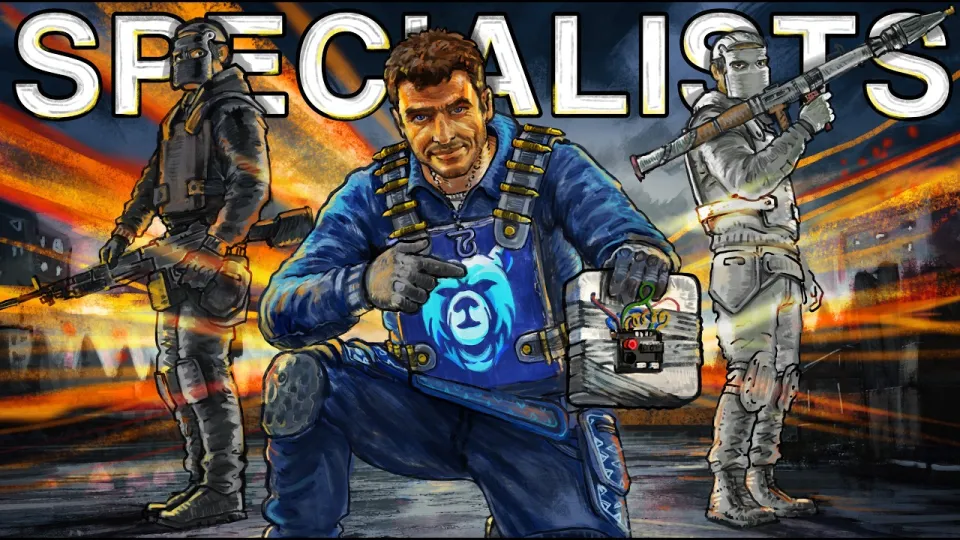
Video: How a 40,000-Hour Trio CONTROLS a SERVER - Rust
Want articles like this for your own video to promote it on YouTube and Google? Order them through the Telegram bot @sat_sit_bot. It writes articles around your video, embeds the video and publishes them on popular niche websites (no ads). Try it free: 50 articles on us.
· based on the channel Blooprint
A 40,000-hour Rust trio controls a server by converting experience into tempo: they finish the early wipe faster, pick raid targets that hurt the competition's progression, and force online defenses while rivals are still building. In the Blooprint video, that pattern plays out on a 500+ population server where a wipe that started without big ambitions turned into a run of raids on the competition. You can follow the same sessions live on Blooprint's Twitch channel.
Rust rewards preparation over raw mechanics at the top level. Three players who have collectively logged tens of thousands of hours do not need to out-aim everyone; they need to reach the right tools earlier and use them before the server catches up.
What 40,000 hours actually buys in Rust
Experience in Rust shows up as compressed decision-making, not as a single skill. A veteran trio reads a wipe the way a chess player reads an opening: which monuments to contest, when to craft explosives, and which neighbors are worth the gunpowder.
The practical advantages stack in a specific order:
- Faster wipe start. Knowing the optimal route through a fresh map means the trio is raiding while most of the server is still farming scrap.
- Better base economics. Compact, layered bases cost less to build and less to defend, which frees resources for explosives.
- Accurate threat assessment. Veterans can tell from a base's footprint and upkeep whether the owners are a real threat or free loot.
- Confident PvP decisions. Knowing when to push and when to disengage saves kits that less experienced players lose to overextension.
- Raid timing. Choosing to hit a target while its owners are online and mid-progression turns a base raid into a psychological blow against the whole server.
None of this is secret knowledge. It is repetition compressed into habits, and it is why a trio with that much playtime can dominate a server with hundreds of players without needing to fight everyone.
How a trio takes over a high-population server
Server control in Rust is a social and economic outcome rather than a kill-count statistic. On a 500+ pop server, no trio can fight the whole map, so control means making the cost of opposing them higher than the reward.
The mechanics of that pressure look like this:
- Raid the competition, not the randoms. Hitting established groups removes the only players capable of contesting monuments and cargo later in the wipe.
- Force online defenses. Online raids generate loot, content and reputation at the same time — the defenders bring their gear to you.
- Hold key monuments. Control of launch site, military tunnel or oil rig translates directly into military-grade loot and explosives.
- Keep roams constant. A trio that is seen roaming with top-tier guns every session discourages casual counters.
- Rebuild fast after losses. The wipe does not end when a kit is lost; the group that is back in the fight within an hour keeps the initiative.
The video's arc reflects exactly this: a quiet start, a quick escalation, and then a stretch where the trio is raiding everyone worth raiding. Control is never declared — it is demonstrated repeatedly until other groups stop testing it.
Raiding as the main tool of control
Raiding is the mechanism that converts a strong trio into a server-wide force, because every successful raid moves resources from rivals to the attackers. Rust's raid economy is unforgiving: sulfur is finite, and every explosive spent is a bet on the loot behind the wall.
Veteran raiders treat that bet as a calculation:
- Scout the base footprint to estimate core size and likely loot rooms.
- Compare the sulfur cost of the cheapest viable path against the expected return.
- Time the raid for when defenders are online and can be fought, not simply offline-wiped.
- Bring enough explosives for a breach plus a margin, since half-finished raids hand the base back to the defenders.
- Secure the loot run immediately — a won raid that is lost on the way home is a net loss.
The trio format is well suited to this. One player handles the breach, one covers the approach, and one manages loot and counters. Small groups move faster and communicate more cleanly than zergs, which is why three strong players can out-tempo a much larger clan on a busy server.
Gear fear and the roaming mindset
Gear fear is the habit that separates a controlling trio from a well-supplied but passive group. Many players hoard M2s and L9s in a box until the wipe ends; the trio in the video does the opposite and takes top-tier weapons out on roams.
That approach has a compounding effect. Roaming with good gear produces fights, and fights produce more gear than farming does per hour. It also builds a reputation: groups that know a trio roams with military weapons think twice before countering a raid or contesting a monument.
The risk is real and should be priced in. Losing a full kit stings, but the alternative — a base full of unused loot and no map presence — costs more over a full wipe. The mindset only works with the supporting habits: reliable communication, a nearby fallback base, and the discipline to disengage when a fight turns bad.
Where viewers push back on the story
Audience reaction to this kind of wipe video splits into a few recurring concerns, and each one is worth addressing honestly. The most common doubts are about how much of a run is skill versus luck, and whether the edited result hides the failures.
- "That turnaround looked too sudden." A single lucky fight or a well-timed counter can flip a session, and highlight edits compress hours into minutes. Long-form wipe videos are a narrative format, not a statistics sheet.
- "Is this realistic for a normal trio?" Not directly. The trio's playtime is the outlier; the transferable parts are the wipe-start route, raid timing and the decision to roam rather than hoard.
- "Server control sounds exaggerated." It is temporary by definition. Every wipe resets the map, and dominance lasts only as long as the group keeps raiding and roaming.
- "Why do people watch Rust without playing it?" The wipe format works as a story with stakes — bases, betrayals and online defenses — which is why a large share of the audience has never launched the game.
Treating the video as entertainment with useful patterns, rather than as a literal blueprint, is the right frame. The patterns transfer; the luck does not.
Useful links
- Blooprint on Twitch — live wipes and raids
- Blooprint on Kick — alternative stream
- Blooprint on TikTok — short clips
- Blooprint on Twitter — announcements
- Blooprint Discord — community and squad-finding
Why the trio format keeps working
A 40,000-hour trio controls a Rust server because experience compresses every phase of the wipe: the start is faster, the raids are better targeted, and the gear is used instead of stored. The video from Blooprint, with Disfigure and Nine, shows the pattern on a 500+ pop server — a modest beginning that escalates into raids on the competition once the trio's tempo takes over. Control here is not a permanent state but a run of decisions that keeps rivals reacting instead of progressing. The channel Blooprint is the author of this breakdown, and the live version of the same approach is available on Twitch.
Key takeaways
- Blooprint's trio with Disfigure and Nine ran a fresh wipe on a 500+ population server and moved from a quiet start to raiding the competition.
- The trio's combined playtime is framed as roughly 40,000 hours, which shows up as faster decisions, not better aim alone.
- Control on a high-pop server comes from raid tempo: hitting rivals before they finish their own progression and forcing online defenses.
- Gear fear is the dividing line: the trio roams with top-tier weapons like the M2 and L9 instead of stockpiling them in base.
- Server dominance is temporary by design — every wipe resets the map, the loot and the power balance.
Source: How a 40,000-Hour Trio CONTROLS a SERVER - Rust · Markdown version
Questions & answers
How does a trio with 40,000 hours actually control a Rust server?
By tempo rather than numbers. The trio finishes the early wipe faster, raids the groups capable of contesting monuments, and keeps roaming with top-tier gear so rivals stay on the defensive. On a 500+ pop server that pressure is enough to shape how everyone else plays.
Is server dominance in Rust mostly skill or luck?
Both, but skill sets the floor and luck decides individual sessions. Veteran players convert more of their fights and raids into lasting advantage, while a single lucky counter or a missed online defense can still flip a night. Edited wipe videos compress hours, so the failures are less visible than the wins.
Why do top players roam with M2s and L9s instead of storing them?
Because gear in a box produces nothing. Roaming with strong weapons generates fights, and fights generate more loot per hour than farming, plus a reputation that discourages counters. It only works with good communication and a fallback base nearby.
Can a normal trio copy this approach on a high-population server?
Partly. The wipe-start route, raid timing and the decision to roam are all learnable habits. The 40,000-hour reaction speed and threat reading are not, so a newer trio should expect slower progress and pick raid targets more conservatively.